Skip to content
E-Commerce Agency in China

Top 10 Things You Must Know to Develop Your E-Commerce in China (2026)

12 min read
Philip Chen

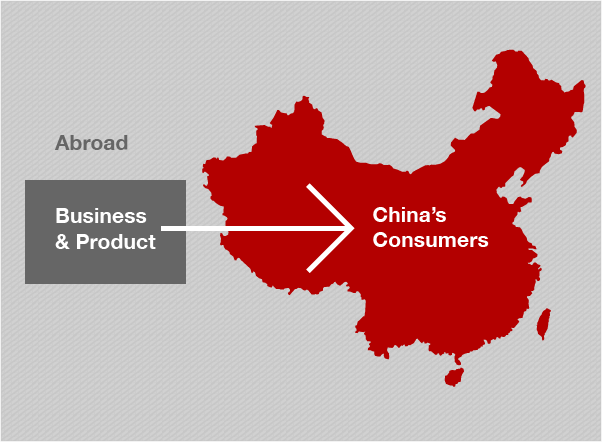
China’s e-commerce market is the largest in the world, and it plays by its own rules. If you’re a foreign brand planning to sell online in China in 2026, you can’t copy your Western playbook and expect it to work. The platforms are different. The consumers are different. The content formats are different.

The good news: the brands that get it right see results that are hard to replicate anywhere else. We’re talking about markets of 900M+ online shoppers, platforms with built-in live commerce, and a consumer base that actively seeks out international products.

Here are the 10 things you absolutely must understand before launching your e-commerce in China in 2026.

1. Cross-Border E-Commerce (CBEC) Is Your Fastest Entry Point

If you don’t have a legal entity in China, don’t panic. 跨境电商 (kuàjìng diànshāng), cross-border e-commerce, lets foreign brands sell directly to Chinese consumers without a Chinese business license, local warehousing, or a domestic distribution network.

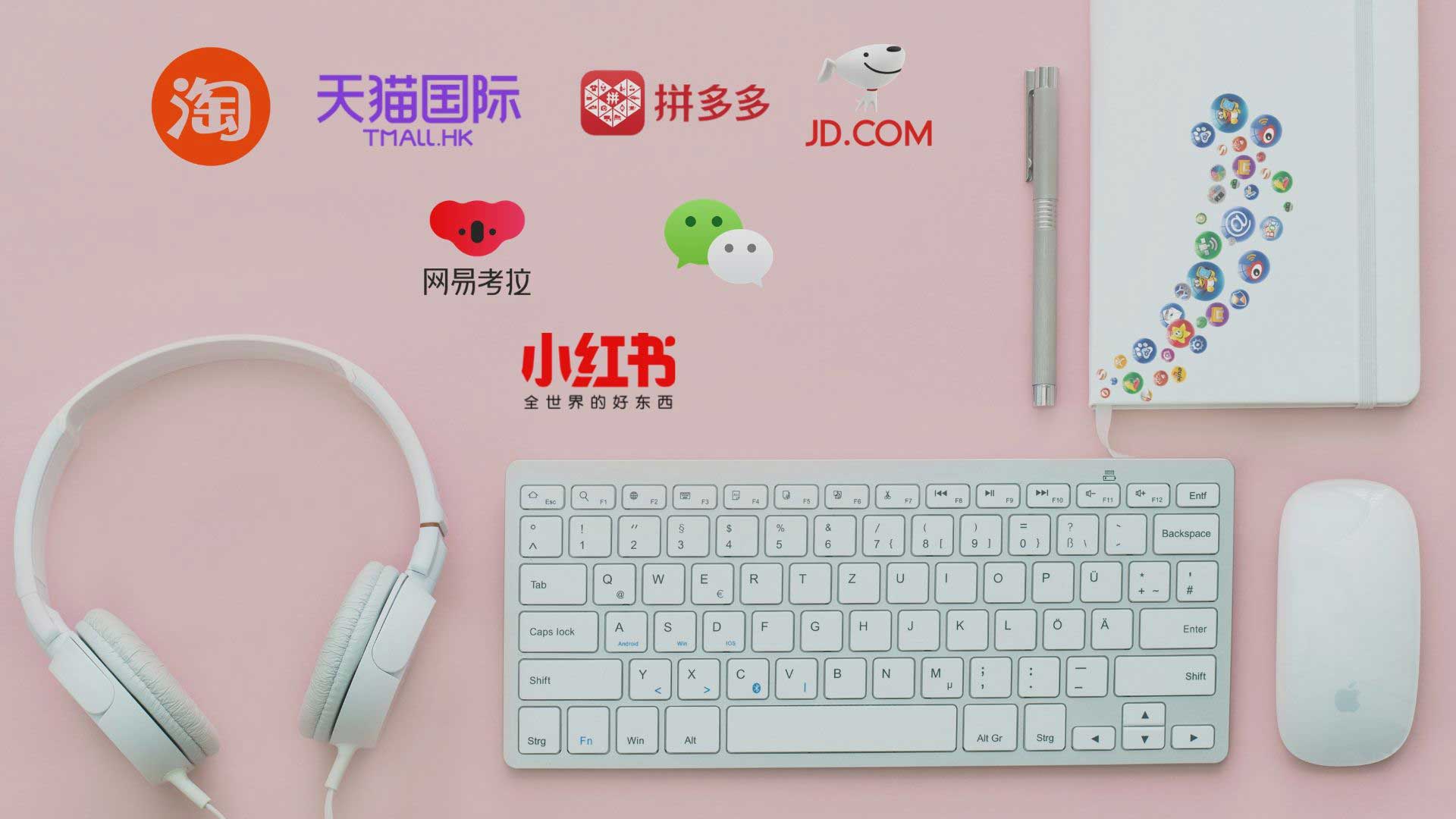
The main CBEC channels in 2026: Tmall Global, JD Worldwide, Kaola (owned by Alibaba), and increasingly Douyin’s cross-border shop. Products ship from overseas or from bonded warehouses in China’s Free Trade Zones.

CBEC is perfect for testing the market before committing to a full domestic presence. Many brands start on Tmall Global, validate product-market fit, then move to domestic Tmall once volumes justify it. Want to understand which model fits your brand? Get a free consultation with our team.

2. Choose the Right Platform, or Lose Before You Start

There’s no “Amazon China.” There are multiple platforms, each with a distinct audience and shopping behavior. Here’s how to think about them:

  • Tmall / Tmall Global: The gold standard for brand flagship stores. Best for established international brands that want premium positioning and brand control.
  • Douyin Shop: Discovery-driven commerce via short video and livestreams. Massive reach, impulse-buy categories, and the fastest-growing platform for new brand launches.
  • JD.com / JD Worldwide: Trusted for authenticity and fast delivery. Strong in electronics, food, and home goods.
  • Rednote (Xiaohongshu / Little Red Book): High-intent female shoppers aged 18-35. The place to seed content and drive purchase intent before the sale happens on another platform.
  • Pinduoduo: Price-sensitive, tier-3/4 cities. Not ideal for premium foreign brands, but dominant in FMCG.

The right mix depends on your product category, price point, and target consumer. A luxury skincare brand and a functional food brand have completely different optimal platform strategies in 2026.

3. Localization Is Not Just Translation

Chinese consumers don’t buy foreign products despite them being foreign, they buy them because they’re foreign. But the way you present, position, and communicate your product needs to be fully localized.

What this means in practice:

  • All content in Mandarin (Simplified Chinese). No exceptions.
  • Product descriptions rewritten for Chinese search behavior and platform SEO, not just translated.
  • Visuals adapted: Chinese consumers respond to different aesthetics, colors, and lifestyle imagery than Western audiences.
  • Payment: WeChat Pay and Alipay are non-negotiable. If your store doesn’t support them, you won’t convert.
  • Logistics: delivery speed expectations in China are extreme. Same-day or next-day delivery is standard in Tier 1-2 cities. Underpromise and overdeliver.

4. Live Commerce Is Not Optional in 2026

直播电商 (zhíbō diànshāng), live commerce, is now the dominant format for product launches, promotions, and new customer acquisition in China. Brands that skip it are leaving a massive revenue channel untapped.

You don’t need a top-tier KOL like Austin Li (who drove RMB 210M in a single session). A well-executed livestream with a mid-tier host (500K-2M followers) in your product category, with the right script and product mechanics, consistently outperforms static product listings.

In 2026, both Tmall and Douyin have built-in livestream commerce infrastructure. Start there. Brands with our Douyin agency support typically see 3-5x higher conversion rates from livestream traffic vs. organic listing traffic.

5. Content Seeding (种草) Drives Purchase Intent

种草 (zhòng cǎo) literally means “planting grass.” In Chinese marketing, it describes the process of seeding authentic content that makes consumers want to buy your product, before they’ve even searched for it.

Rednote (Xiaohongshu) is the home of 种草. Over 300 million users, mostly female, aged 18-40, use it to discover new products through peer reviews, tutorials, and lifestyle content. A brand that appears on Rednote with genuine user content builds trust at a scale that paid ads can’t match.

The playbook: work with KOCs (Key Opinion Consumers, everyday users with 5K-50K followers) for authentic, high-trust content. Layer mid-tier KOLs on top for reach. This combination beats single big-KOL campaigns in both cost and credibility.

6. WeChat Is Your CRM and Loyalty Engine

WeChat is not a sales channel in the same way Tmall is. But it is the most powerful customer retention tool in Chinese ecommerce. Here’s why:

  • Official Accounts: Your brand’s content hub. Subscribers receive your posts directly in their feed.
  • Mini-Programs: Lightweight apps inside WeChat. Brands use them for loyalty programs, flash sales, product demos, and repeat purchases, all without leaving WeChat.
  • Private Domain Traffic (私域流量): WeChat groups and 1:1 messaging with brand WeCom accounts. The Chinese equivalent of an email list, but with open rates above 80%.

Every customer who buys on Tmall or Douyin should be directed into your WeChat network for follow-up. Brands that build strong private domain traffic on WeChat see dramatically higher repeat purchase rates, sometimes 40-60% of revenue in year 2 and beyond.

7. AI Shopping Is Reshaping How Chinese Consumers Discover Products

In 2026, AI shopping assistants on Taobao, Tmall, and Douyin actively guide product recommendations based on user behavior, content signals, and platform data. This is not just algorithm optimization, it’s a fundamental shift in how products get discovered.

Your product titles, descriptions, images, and A+ content need to be optimized for AI-powered discovery, not just keyword search. Brands that invest in structured, rich product data outperform those with thin listings, even if the product itself is superior.

8. Chinese Consumers Research Before They Buy

口碑 (kǒubēi), word of mouth, is sacred in Chinese consumer culture. Before making a purchase, especially for imported products, Chinese shoppers check:

  • Rednote reviews and tutorials
  • Douyin video reviews
  • Zhihu Q&A threads
  • Tmall store ratings and buyer reviews
  • Brand presence on Weibo

A brand with zero presence outside its Tmall store is a brand that consumers don’t trust. Your digital footprint across platforms is as important as your product listing itself.

9. Timing Your Campaign Around China’s Shopping Calendar

China’s ecommerce calendar is packed with sales events that dwarf anything in the West. Plan your inventory, promotions, and marketing spend around these:

  • 618 (June 18): JD’s anniversary sale. Now a major event across all platforms.
  • Double 11 (November 11): The biggest ecommerce event on the planet. Planning starts in August.
  • Double 12 (December 12): Second wave after 11.11, often focused on Taobao small sellers.
  • Chinese New Year (Jan-Feb): Gift-giving season. Huge for food, beauty, luxury.
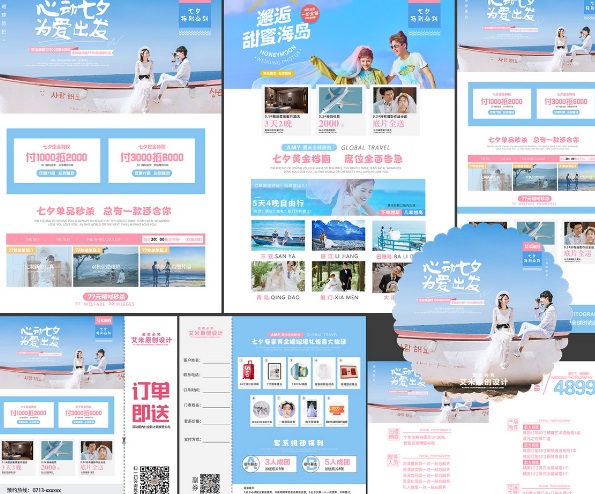
  • Qixi (Chinese Valentine’s Day, August): Key for jewelry, cosmetics, fashion.

Brands that don’t plan around this calendar miss 60-70% of their potential annual revenue. Winning 618 or 11.11 requires 3-4 months of preparation, not 3 weeks.

10. Work With a Certified China Ecommerce Partner

This is the most practical tip on the list. The Chinese ecommerce network is relationship-driven. Platform access, KOL partnerships, bonded warehouse setup, and livestream slots, all of these are faster and cheaper with the right local partner who has done it before.

Chinese consumers have not the same needs and desires as your local target. The brands that succeed in China are the ones that respect this, and work with people who genuinely understand the market, not just the marketing.

EAC is a specialized China ecommerce agency with hands-on experience across Tmall, Douyin, Rednote, and WeChat. We’ve helped international brands across beauty, food, fashion, and lifestyle enter and scale in China.

Ready to Launch Your E-Commerce in China?

The market is competitive, but the opportunity is real. The brands winning in China in 2026 are not necessarily the biggest brands, they’re the most prepared ones.

We offer a free brand audit to assess your current readiness for the Chinese market and map out a realistic entry or scaling strategy.

Request your free brand audit →

Sources: Statista, China E-Commerce Market | McKinsey China Consumer Insights

Related Reading

China E-Commerce Strategy in 2027: What Has Changed and What Still Works

The China e-commerce landscape in 2027 is more complex than it was five years ago. In 2022, the standard playbook was: open a Tmall flagship store, run KOL campaigns on Weibo and Xiaohongshu, bid on Baidu keywords, and use JD for electronics. That playbook still has merit, but it misses Douyin Shop (which didn’t exist at scale in 2022), the maturation of Pinduoduo into a mass-market force, and the structural shift of Xiaohongshu from inspiration to conversion. Brands that haven’t updated their strategy since 2022 are working with an outdated map.

Live commerce is no longer optional — it’s table stakes. In 2020, live streaming was a novelty. In 2027, brands that don’t run regular live sessions on Douyin and Taobao Live are invisible during the window when algorithmic traffic peaks. Platforms reward live activity with organic reach that passive stores never receive. Even a 1-hour weekly live session run by a single host outperforms a static store for search ranking in categories like beauty, food, and health products.

Private traffic (私域流量) became a survival skill, not a nice-to-have. Platform acquisition costs rose 40-60% between 2020 and 2026. Brands that built WeChat private traffic ecosystems (official accounts, mini-programs, community groups) during that period now have a cost-efficient retention channel that platform algorithm changes cannot disrupt. Brands that didn’t build private traffic are entirely dependent on paid platform traffic — an expensive and increasingly volatile position.

Multi-platform presence is the new standard, but focus still matters. The average successful international brand in China in 2027 operates stores on Tmall (or Tmall Global), JD (POP or self-operated), and Douyin Shop, with content on Xiaohongshu and a WeChat ecosystem for retention. This is complex to manage well. Brands that spread resources too thin across all platforms without depth on any of them underperform brands that dominate one or two platforms before expanding. Start deep, then expand wide.

Search engine optimization for China now includes Douyin and Xiaohongshu, not just Baidu. Chinese consumers increasingly start product searches on Xiaohongshu and Douyin rather than Baidu. Brands that rank well on these platforms — through content volume, engagement quality, and keyword-rich post descriptions — capture search intent at the discovery phase. A brand visible on Xiaohongshu, Douyin, and Baidu simultaneously has 3x the search real estate of a brand that only invests in Baidu SEM.

Technical Tips for China E-Commerce Strategy in 2027

  • Audit your platform mix against your category data, not general advice. Pull your category’s GMV breakdown across Tmall, JD, Douyin Shop, and Pinduoduo from platform merchant reports or third-party data tools (魔镜, CBNData). Your category’s actual platform distribution tells you where to focus investment, not industry articles written about the average brand.
  • Build your WeChat private traffic infrastructure before scaling paid traffic. Every new buyer you acquire through paid ads is a cost you pay once. Every buyer you convert into a WeChat follower or group member is a customer you can reach for almost free on repurchase. Set up your WeChat official account, mini-program, and post-purchase group entry flow before you spend heavily on platform advertising.
  • Test Douyin Search Ads alongside feed ads for bottom-funnel conversion. Douyin now handles 600 million+ daily searches. Search ads on Douyin target users with specific purchase intent, similar to Baidu SEM but with a younger demographic. Test a budget allocation of 20-30% of your Douyin ad spend on search ads versus the standard feed placement and compare cost-per-conversion.
  • Review your Xiaohongshu content strategy quarterly. Xiaohongshu’s algorithm evolves rapidly. Content formats that worked in early 2026 (long listicle posts) may underperform formats trending in 2027 (short 9-image carousel series, AI-tool comparison posts). Follow top creators in your category and update your content strategy to match current platform trends every 90 days.

What Brands Say About China E-Commerce Strategy

“We had a solid Tmall store and ignored Douyin for two years. When we finally launched Douyin Shop in 2025, it became our fastest-growing channel in 6 months. The audience overlap with Tmall was only 30%. We were missing 70% of our potential buyers by not being on Douyin.”

China e-commerce director, premium personal care brand

“We built a WeChat community of 8,000 members over 18 months while our competitors focused only on Tmall advertising. When Tmall changed its algorithm and our organic traffic dropped 40%, we sent one WeChat group message and recovered 60% of the lost volume in 48 hours. Private traffic is an insurance policy.”

China GM, imported health supplement brand

FAQ: Real Questions Chinese Brands and Sellers Ask About E-Commerce Strategy

2027年做电商哪个平台最好?(In 2027, which platform is best for e-commerce?) There is no single best platform — the right answer depends on your category, price point, and target buyer. Tmall is best for premium international brands building long-term brand equity. JD is best for electronics, home appliances, and categories where fast delivery and authenticity matter most. Douyin Shop is best for discovery-driven categories where content drives impulse purchase (beauty, snacks, apparel). Pinduoduo is best for price-competitive products targeting tier-3 to tier-5 city buyers and rural consumers. Most successful brands in 2027 operate on at least two of these platforms, starting with the one that best matches their category profile and expanding once operations are established.

在中国做电商最容易犯的错误是什么?(What are the most common mistakes in China e-commerce?) The top mistakes EAC sees repeatedly: (1) Entering without sufficient brand protection — trademark registration and GACC registration should happen before any sales activity. (2) Underbudgeting for the first year — platform deposits, TP fees, content production, and paid traffic mean the first year costs 2-3x what most brands forecast. (3) Treating all platforms the same — content and pricing strategy that works on Tmall often fails on Douyin or Pinduoduo because buyer intent and platform mechanics differ fundamentally. (4) Ignoring private traffic — brands that acquire buyers through paid ads without a retention strategy rebuild their customer base from scratch every quarter. (5) Launching too many SKUs at once — 3-5 hero products with strong content and review support outperform 30 SKUs with thin content coverage every time.


Philip Chen, CEO EAC Ecommerce China Agency

EAC builds end-to-end China e-commerce strategies for international brands, covering platform selection, store setup, live commerce, content marketing, private traffic, and performance optimization across Tmall, JD, Douyin Shop, and Pinduoduo.

Get a free brand audit from our team. We review your current China presence and build a 2027-ready strategy tailored to your category and budget.

Follow Philip Chen on LinkedIn: linkedin.com/in/philip-chen

Written by

Philip Chen

Philip is a specialist about Digital and e-commerce in China. Founder of Ecom China, he has been helping brands in the Chinese market for over 15 years.

Related Articles

China e-commerce

NMPA Blue Hat Registration in China: A Complete Guide for Foreign Supplement Brands (2026)

If you want to sell health supplements in China offline — in pharmacies, supermarkets, hospitals, or clinics — you need Blue Hat certification (蓝帽子). Issued by the National Medical Products Administration (NMPA), the Blue Hat mark is China’s official approval for health food products. Without it, you cannot make health claims in offline retail and […]

Read more →
WeChat eCommerce China e-commerce

WeChat eCommerce: Create a Brand’s Store in a WeChat Mini-Program

Welcome to the world of WeChat eCommerce, an exciting and evolving frontier where China’s most popular messaging app meets online shopping. With over 1.26 billion monthly active users, WeChat presents a unique opportunity for businesses looking to tap into the Chinese market by offering seamless cross-border payments and shipping products straight to consumers’ doorsteps. Through […]

Read more →
China e-commerce

Sell on Taobao Store: Beginners Guide

Harry Huang, E-Commerce Performance Manager at EAC Ecommerce China Agency. Harry’s job is simple: make your China store profitable, fast. He runs platform accounts on Tmall, JD, and Douyin with one metric in mind — revenue per RMB spent. No wasted cycles, no bloated retainers. His approach is diagnostic. He identifies the exact conversion blockers […]

Read more →