
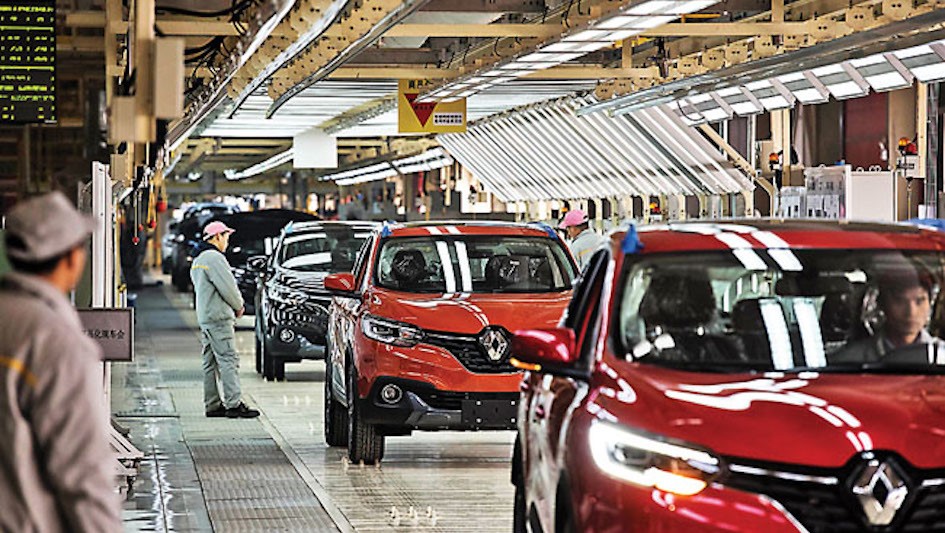
Automobile market in China
The Chinese passenger vehicle market hailed years of high-speed growth and entered a new phase of development. In the short term, this era is characterized by a drop in overall sales. But this is more a pause for breath than the end of the road, as the growth potential remains strong.
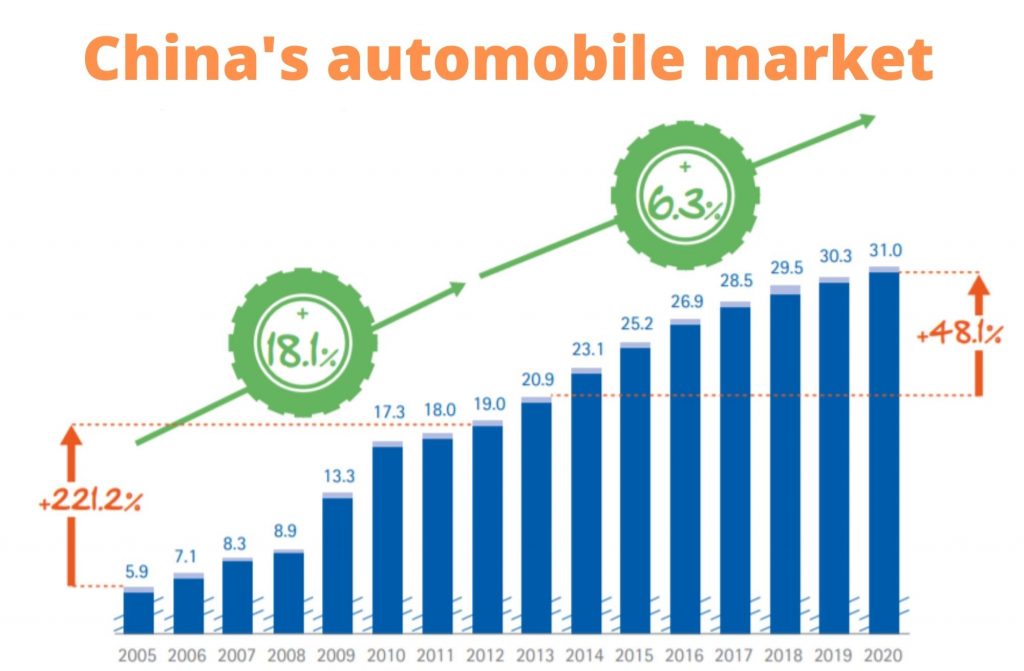
The proportion of new buyers is declining, therefore attracting and maintaining the loyalty of existing car owners is becoming increasingly important.
Need a cost effective TP (Tmall Partner) to sell in China?
We are an Official Tmall Partner e-commerce Agency. Our Services: E-Commerce, Search Engine Optimization, Advertising, Weibo, WeChat, WeChat Store & PR.
In a period of intense competition and a narrowing of opportunity for weak and challenger brands, automotive executives of both foreign and domestic brands must strive harder to understand their customers and communicate their advantages.
Despite these results, China remains the world’s largest automotive market, and it exhibits strong demand from both prospective and existing car owners, and for both new cars and, increasingly, used vehicles.
Automobile consumers trends in China
Potential growth of automobile market
The percentage of automobile ownership remains relatively low in China, therefore, considering the existing automobile ownership and the state of the highway infrastructure, the potential growth of automobile sales is significant.
In addition, Chinese consumers remain attracted to the idea of automobile ownership for passion, driving and safety, suggesting long-term incremental growth.
Reach customers’ pre-purchase mind-set
Chinese consumers are developing a deeper loyalty to brands, especially in the domestic segment, where leading brands take nearly 80 percent market share.
Therefore improving brand awareness and reliability is vital for brands.
Online and offline customer experience integration
Integrating both online and offline touchpoints to create an omnichannel experience that meets the changing needs of Chinese consumers, and introduces innovative service models, is essential.
New energy vehicles as customers need
As Chinese consumers awareness improves, and policy support is withdrawn, they are becoming more rational in their choices regarding new energy vehicles. Crucially, therefore a deeper understanding of customer needs, and improving their experience will be key to driving profitability.
Live streaming as a new opportunity for Brands
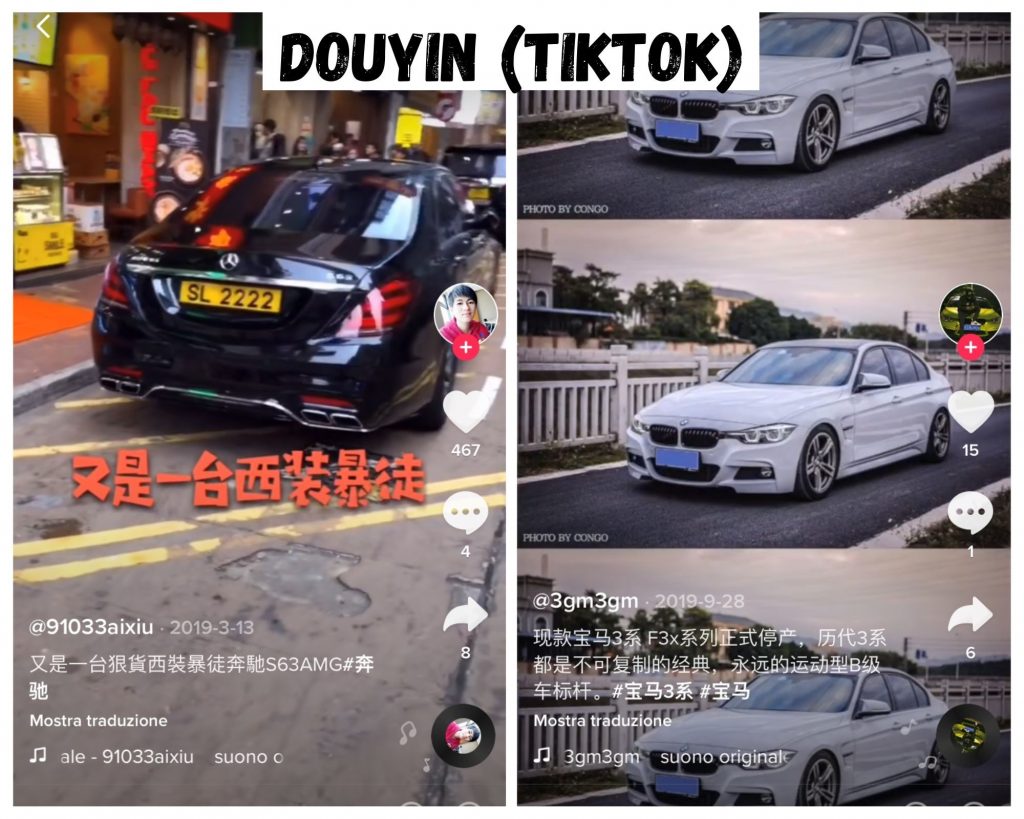
In their purchasing decision, Chinese consumers rely predominantly on four factors: friends and colleagues, family members, manufacturer websites and social media.
Due to these reasons, during the Covid-19 pandemic, Chinese automobile dealerships are turning to platforms like Douyin (TikTok) to drive up sales. They embraced live streaming as a way to keep the conversation going with potential consumers who were also stuck at home.
The number of live streaming sessions involving the auto industry increased 15 times in March compared to January, and the total number of attendees increased six times.
The new trend of automobile live-streaming has captured the attention of both consumers and content creators with its informative, efficient and interactive way of connecting to its users.
The use of these platforms could be a big opportunity for brands to increase their brand-awareness and to show their brand’s value to their customers, gaining visibility and increasing sales.
How to reach Chinese consumers using e-commerce Live streaming platforms?
Some of the most important e-commerce live streaming platforms in China:
Taobao live
Taobao Live, the dedicated livestreaming channel launched by E-commerce giant Alibaba in 2016, generated amazing sales of 20 billion yuan during Alibaba’s Singles’ Day 2019 shopping.
Taobao Live allows users to watch live streams and shop at the same time. KOLs (Key Opinion Leaders) or Livestreamers will work with a variety of brands to give their users coupons or discounts directly and encourage consumers to shop.
Douyin
Douyin is currently the hottest short video app in China, with more than 400 million daily active users. Despite being behind Taobao Live in the e-commerce livestreaming, Douyin takes the second place in China with 13% of the market. In addition, the COVID-19 epidemic has cause a boom in Douyin livestreaming.
Kuaishou
China’s third hottest short video app Kuaishou has more than 200 million daily active users and holds an 8% share of the e-commerce livestreaming market in China following Alibaba’s Taobao Live with 79% and Douyin with 13%.
Kuaishou’s revenue from livestreaming reached 30 billion yuan in 2019 and its earnings from gaming and e-commerce totalled several billions of yuan.
Why a brand in automobile industry should use these platforms?
Live streaming are very popular in China and are particularly loved by users for their ability to be transparent and authentic.
In China, many companies integrate live streaming into their internationalization strategies, for their ability to engage large masses of users in minutes. The KOLs, in all this, are the key that guides the listening.
Companies must focus on growing their brand awareness, especially in this period of crisis due to Covid-19.
These platforms offer a great opportunity to you to gain visibility, to keep in touch with your customers, to increase your followers and thus increase sales.
How a brand should use these platforms?
Whether you are interested in boosting awareness or generating leads, a KOL can do wonders for reaching your ideal audience. Your KOL search should consist of choosing an influencer that has quality content and deep insights into their viewers.
In their purchasing decision, Chinese consumers rely mainly on manufacturers’ websites and social media.
That’s why is very important to manage social media accounts in Chinese market.
Social networks to gain visibility in Chinese market
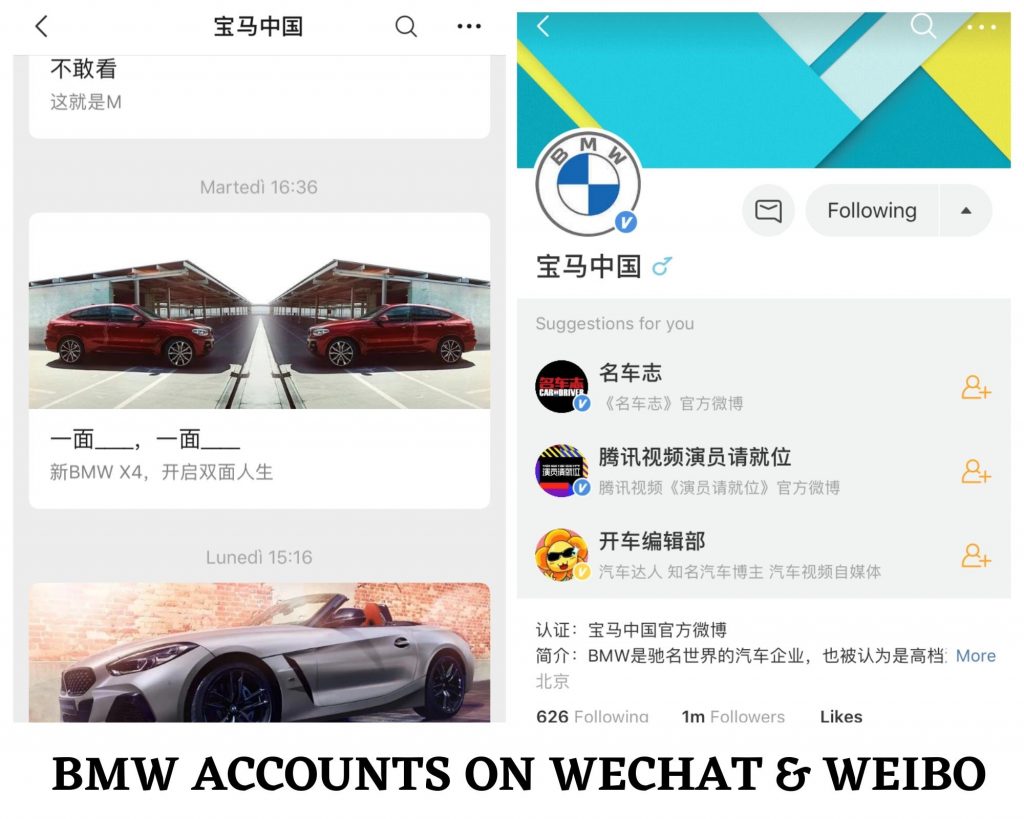
Wechat account
WeChat is definitely an effective tool for sharing information and news with your followers. Marketing on WeChat can mean many things:
- new products can be presented and promotions launched
- create exclusive competitions and games to interact with your audience
- allow the user to browse the site to receive information
- pay directly with the WeChat Wallet.
A few days ago, the company also launched the live streaming function in the mini programs by communicating the app-grade directly to users through a notification inviting them to activate and try this new function.
It looks very similar to many other live streaming systems, in fact the brand account and the number of spectators are visible in the upper left. It is also possible to comment and share the live broadcast.
The peculiarity of this system is the presence of the function that directs you directly to the purchase page. Using this function you access a page that contains the list of all products with their description. You can then access the product page and return to live streaming freely and at any time.
Weibo account
Sina Weibo (新浪微博) is a Chinese microblogging website similar to Twitter.
You can use Weibo in different ways depending on the needs of the company. First of all, its features make it useful for communicating quickly with many followers at the same time. Weibo is the most open social network in China, in fact users can see posts from anyone.
Weibo offers brands various functions:
- increase in brand awareness
- referral to e-commerce platforms through external links
- starting collaborations with Key Opinion Leader
- word-of-mouth spread
- investments in brand advertising (through display adv, search engine promotion and other advertising techniques)
Sina Weibo also has many other useful features to make brands known and to interact with their community or target audience. For example, the Miaopai application allows users to share videos and record live streamsing.
What about your website?
As I said before when it comes to deciding which car to buy, Chinese consumers rely predominantly manufacturer websites and social media.
Therefore it is essential for a foreign brand to create a visible website on Baidu for several reasons :
- Chinese are among the world’s largest internet users. To reach Chinese users it is essential to use Baidu. The reason is simple: it holds over 80% of the search engine market.
- Nine out of ten Chinese users say they use Baidu to search online.
Remember that If well indexed on Baidu, traffic to the site will increase exponentially. So a proper Baidu SEO strategy is important.
In addition, you should create a Chinese-language website for two reasons:
- will be rewarded by Baidu (therefore it will be faster to load)
- the knowledge of English is not yet widespread in China.
In China you can also buy automobile through e-commerce platforms
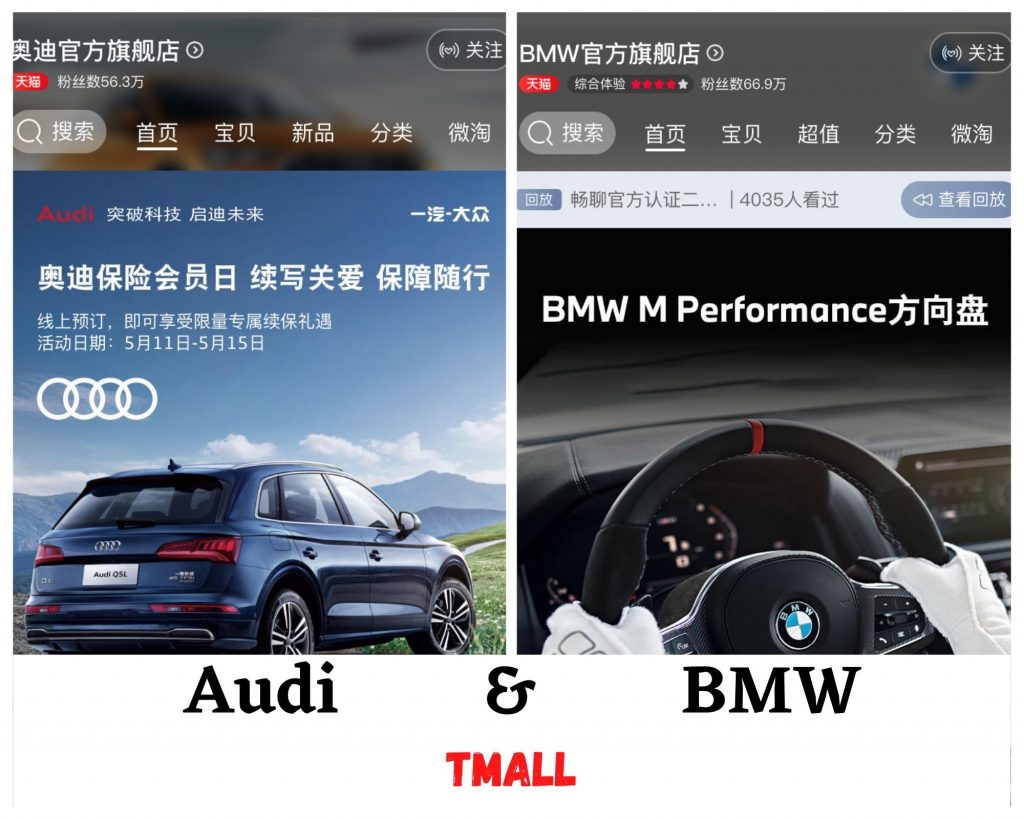
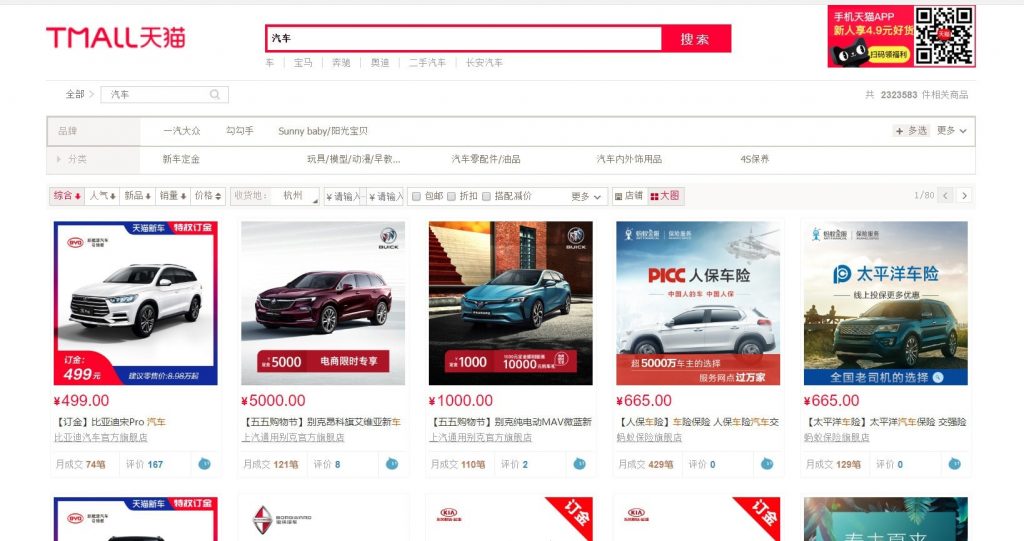
Cars in China can also be purchased online and this is possible thanks to the Tmall e-commerce platform.
For more than a year, the Alibaba Group has been experimenting with various online sales methods. In March of this year, Alfa Romeo sold 350 Giulia’s in just 33 seconds.
The presence of car manufacturers on Tmall is now a constant. The e-commerce platform also features premium brands such as Audi, BMW and Mercedes.
For years, car manufacturers have been investing in innovative approaches for the sale of cars and China is the market that is proving more receptive to news than any other.
According to a McKinsey report, China will contribute more than half of the growth in car sales by 2022. And the market segment with the strongest growth will be that of luxury cars.

Do you want to know more about How to reach Chinese consumers? Contact GMA a digital marketing agency, specialized in Chinese digital market.
Read also :




Hi dr my name kashif from pakistan
I need your company cars To sell in pakistan My whats app number
00923446943002